
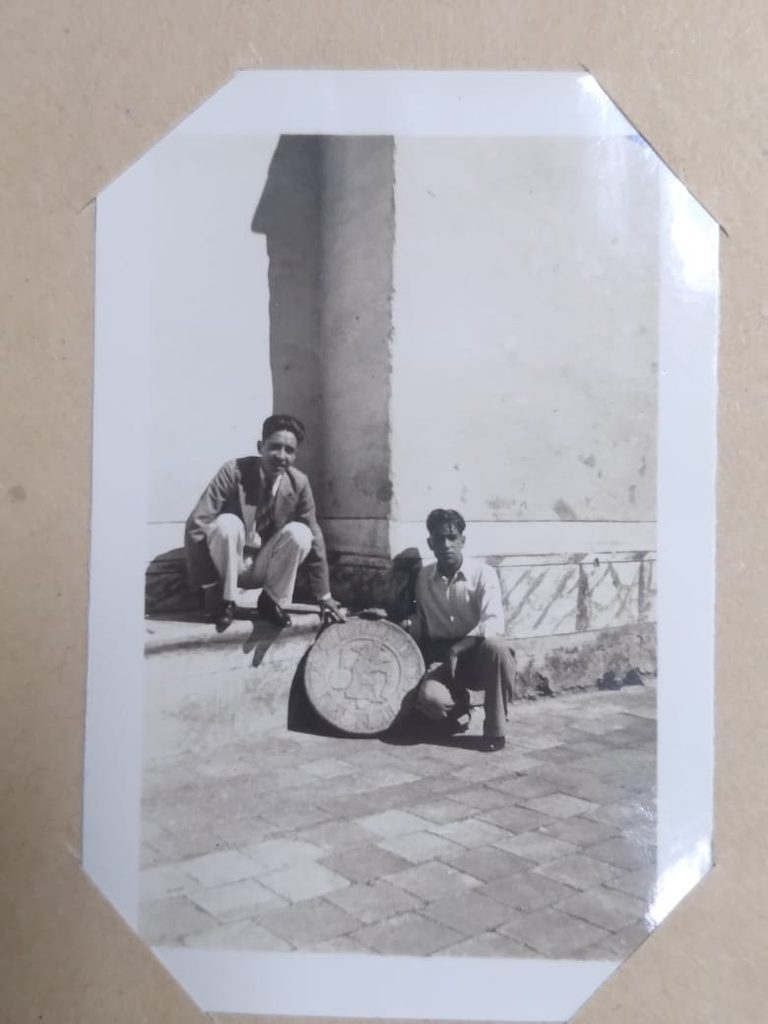
Hidden in a corner of the Maya Hall of the National Museum of Anthropology in Mexico City is an extraordinary ballcourt marker from La Esperanza, Chiapas. It was discovered in 1936 by a local farmer (Figure 1) and taken immediately to the National Museum, where it has been on display ever since. It is one of the finest carved monuments of Maya art in the museum’s collections. Unfortunately, because of its hidden location, it has not received the attention it deserves from visitors in recent decades.
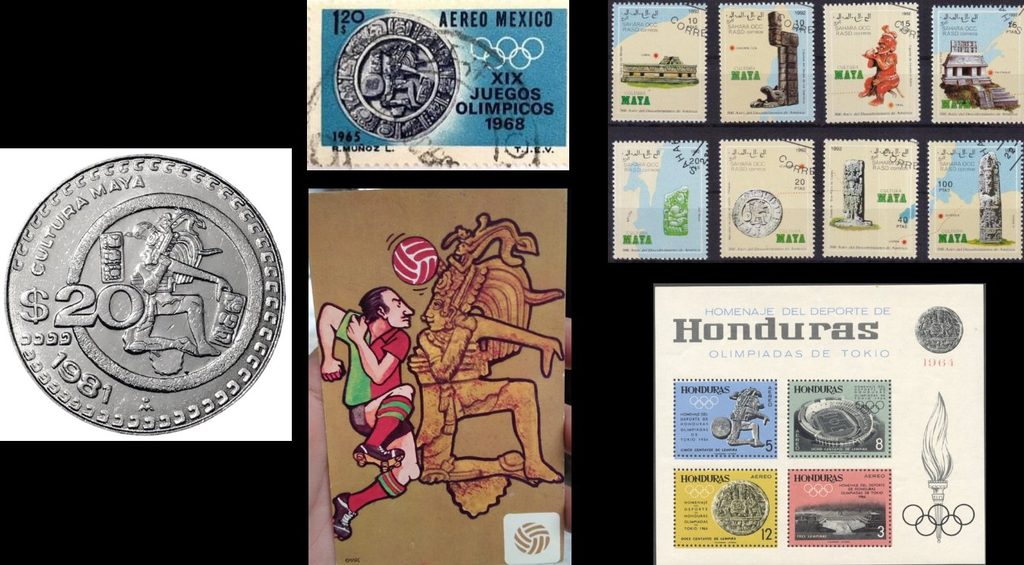
What is exciting about this ballcourt marker, though, is how its scene of a ballplayer striking a rubber ball with his hip became so popular throughout the 20th century, and remains so today. It has been reproduced in many media, including book covers, coins, banknotes, flags, magazines, video games and T-shirts. The most important instances, of course, are the Olympic Games and the Soccer World Cup (Figure 2).
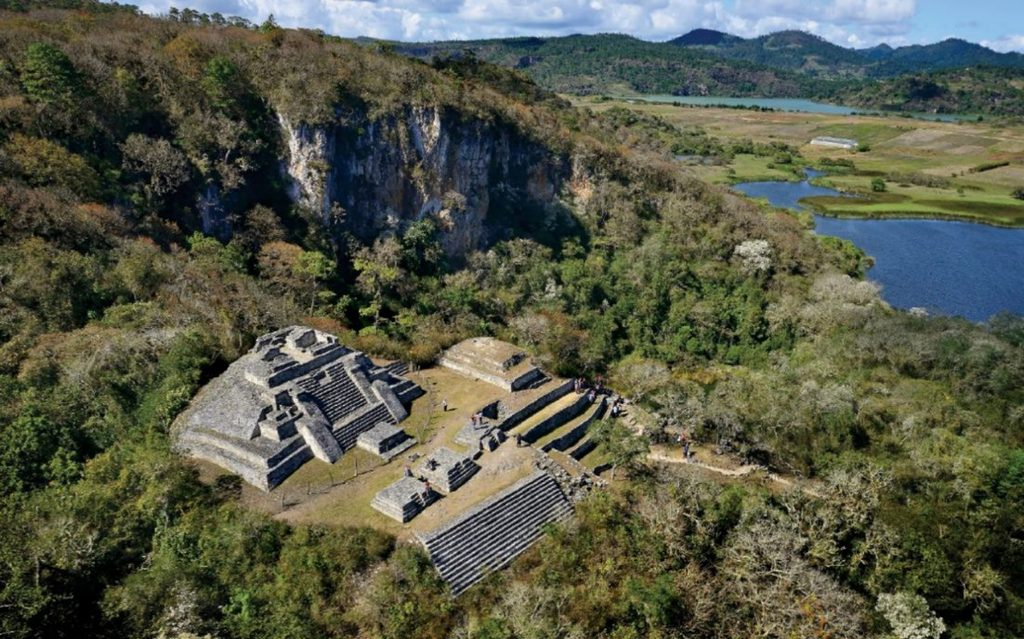
La Esperanza was a minor settlement 10 km from Chinkultic, a regional polity in the Montebello Lakes, near the modern border between Chiapas and Guatemala (Figure 3). The marker was originally part of an early stage of the Chinkultic ballcourt, in the late 6th century, but was later removed and reused at La Esperanza. This is why the sculpture is also known as the “Chinkultic Marker.”
The scene depicts a ruler striking a rubber ball with his hip as part of the ballgame (Figure 4). He wears protective gear: a waistband, knee and arm pads, and handstones, or manoplas. The main hieroglyphic inscription runs along the rim of the marker and records calendrical information about the marker’s dedication in AD 591.
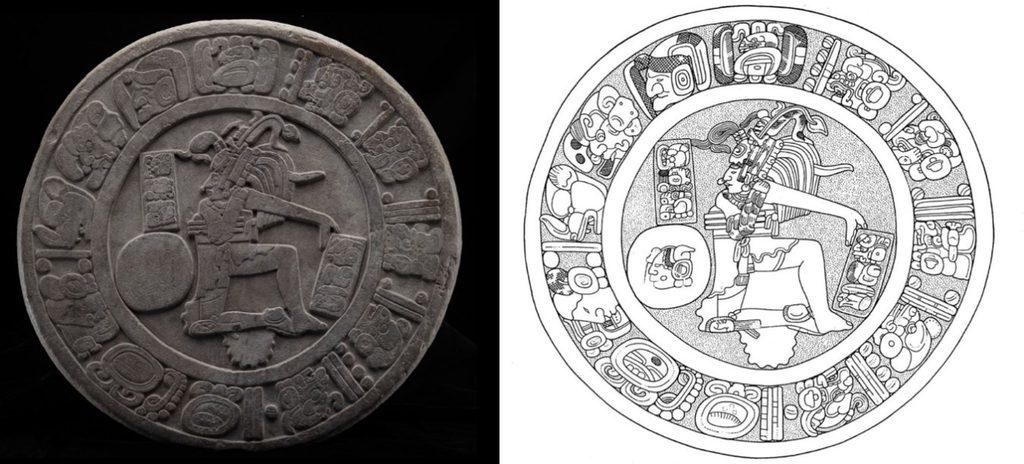
The Chinkultic ruler, shown as a ballplayer, is accompanied by two columns of smaller glyphs related to the scene. The left column reads U-BAAH ta-OCH-K’AHK’ ta-ke-hi-na?, ubaah ta ochk’ahk’ ta kehiin, “his image/body in the act of fire-entering, in the act of kneeling.” The first phrase refers to fire rituals and the dedication or renewal of temples and monumental sculpture, possibly this marker itself. The second turns to the act of striking the ball, an extraordinary example of correspondence between text and image. The right column records the ruler’s name and lineage.
In sum, this ballcourt marker has historical and aesthetic value as the earliest hieroglyphic inscription in the Chinkultic area. For the purposes of this note, however, what matters most is to celebrate the cultural reach this pre-Columbian object has had for so many decades. After the Aztec Sun Stone and the sarcophagus lid of Pakal, the La Esperanza Marker may be one of the most reproduced pre-Columbian objects in popular culture.

About the author
Ángel A. Sánchez Gamboa is a historian and epigrapher at Mexico’s Instituto Nacional de Antropología e Historia (INAH), where he works with the CNCPC, INAH’s national coordination for the conservation of cultural heritage. Since 2015 he has been the epigrapher on an INAH project studying the archaeological collections in museums across Chiapas. He is co-author, with Martha Cuevas García and Yuriy Polyukhovych, of Monumentos escultóricos de Palenque, the catalog of Palenque’s sculptural corpus, and has published research on Toniná, Palenque and Chinkultic. He holds a History degree from UNAM and leads Triptlán’s Maya epigraphy tour at the National Museum of Anthropology.
