
While much of Europe was going through the Middle Ages, the great cities of Mesoamerica were already recording their history in stone temples, hand-painted codices, and ceramics. Long before the arrival of Europeans, civilizations across the Americas, including the Maya, Mexica, and Mixtec, developed complex writing systems capable of preserving historical events, genealogies, religious rituals, and astronomical observations.
More than simple communication tools, these systems represented memory, power, and sacred knowledge. Through them, ancient Mesoamerican cultures left testimony of how they understood the universe and their place within it. For the Maya in particular, that testimony survives today in museums, in archaeological sites, and in the walls of the National Museum of Anthropology in Mexico City. Most visitors walk past it without knowing what it says. Some inscriptions, with the right guide, can be read aloud.
Writing Systems of the Ancient Americas
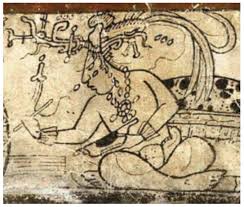
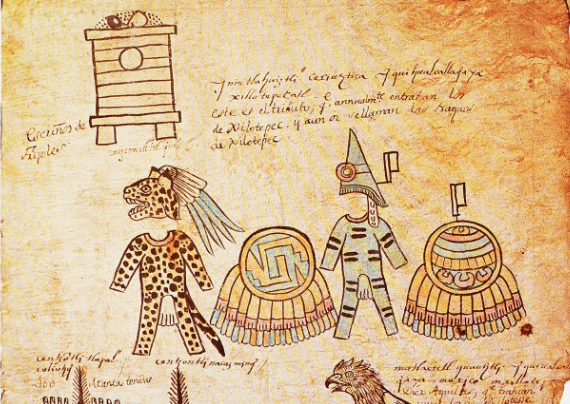
Among all the civilizations of the region, the Maya developed one of the most sophisticated writing systems in the Americas.
Their glyphs could represent sounds, words, and even complete ideas. Carved into stelae, stairways, temples, ceramics, and codices, these symbols narrated wars, political alliances, ritual ceremonies, and the lives of great rulers.
Other Mesoamerican cultures, such as the Mexica and the Mixtec, also developed important pictographic traditions. Their codices, created on amate paper or deer skin, functioned as books in which lineages, tributes, trade routes, and mythical narratives were preserved. However, much of this knowledge was lost after the arrival of Europeans, when numerous documents were destroyed during the process of evangelization.
Today, when visiting archaeological sites such as Palenque, Chichén Itzá, or Monte Albán, it is still possible to observe inscriptions carved more than a thousand years ago. What many visitors see as mysterious symbols are fragments of stories that survived the passage of time intact.
The Burning of the Codices and the Man Who Put the Pieces Back Together
One of the most consequential episodes in the history of Mesoamerican writing occurred in 1562, when the Franciscan friar Diego de Landa ordered the burning of Maya codices in Yucatán. The scale of destruction was enormous. Decades of accumulated knowledge, genealogical records, astronomical observations, and historical accounts were reduced to ash in a single afternoon.
Ironically, for someone who had done so much to erase the culture of the Maya, Landa’s work would prove as crucial as the Rosetta Stone in Egyptology in helping to decipher their complex literature centuries later.
Years after the burning, Landa himself documented several Maya signs in his manuscript Relación de las cosas de Yucatán, a record he compiled partly to justify his actions at trial. That document, preserved largely by accident, would become one of the most important keys to unlocking the entire Maya writing system.
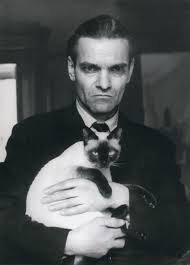
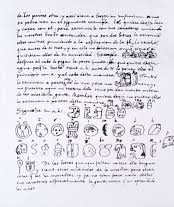
It was not until the 20th century that linguist Yuri Knorozov cracked the code. His breakthrough came from a careful reading of Landa’s manuscript.
He realized that when Diego de Landa tried to write a letter of the Spanish alphabet in the Mayan language, he pronounced it out loud, and the local scribe wrote down the sound, not the letter, using the most appropriate hieroglyph. Thus “K” turned into “ka” and “L” into “el.” The alphabet contained syllabic symbols, not letters or ideographs.
It was a major revelation that changed everything.
Thanks to Knorozov’s methods, the ancient Maya ceased to be seen solely as astronomers and architects. They were revealed as dynamic societies with complex political structures, profound intellectual traditions, and a rich historical memory.
When researchers applied his methods to the Tablet of the 96 Glyphs at Palenque, they deciphered actual names of Maya rulers, including the great king K’inich Janaab’ Pakal.
How the Maya Writing System Actually Works
Maya writing is a logosyllabic system, meaning it uses a combination of logograms, signs that represent whole words or concepts, and syllabic signs that represent individual sounds. A single glyph block can contain multiple elements that work together to form a complete word or phrase.
This is why reading Maya inscriptions is not a matter of memorizing a simple alphabet. It requires understanding how individual signs combine, how context shapes meaning, and how the same concept can be expressed in multiple ways depending on the scribe, the period, and the region.
Around fourteen original pre-Hispanic codices are currently known to survive, considered among the most important historical treasures of Mexico.
Each one represents a different tradition, a different scribal school, and a different body of knowledge.
The discipline responsible for studying and interpreting these inscriptions is known as epigraphy. Today, archaeologists, historians, and linguists affiliated with institutions like INAH continue working to reconstruct the voices of the Mesoamerican past through glyphs carved centuries ago. The field is still active. New readings are still being made. The story of the ancient Maya is still being written.
What Is an Epigrapher and Why Does It Matter for Your Visit?
An epigrapher is a specialist in the study of inscriptions. In the context of Maya studies, that means someone trained to read hieroglyphic texts directly, not from a script or a summary, but from the inscription itself, identifying each sign, understanding its phonetic or logographic value, and reconstructing the meaning in context.
This is a different level of engagement than what most museum tours offer. A general guide can tell you that a stele commemorates a ruler. An epigrapher can tell you which ruler, what the inscription actually says about him, what political claim it was making, and what was happening in the Maya world at the time it was carved. The difference is not small. It is the difference between seeing history and reading it.
Understanding the writing systems of pre-Columbian civilizations completely transforms the experience of visiting an archaeological site. Stones cease to be silent ruins and begin telling stories of kings, battles, ceremonies, and ancient ways of understanding the world.
See the Maya Collection With an Active INAH Researcher
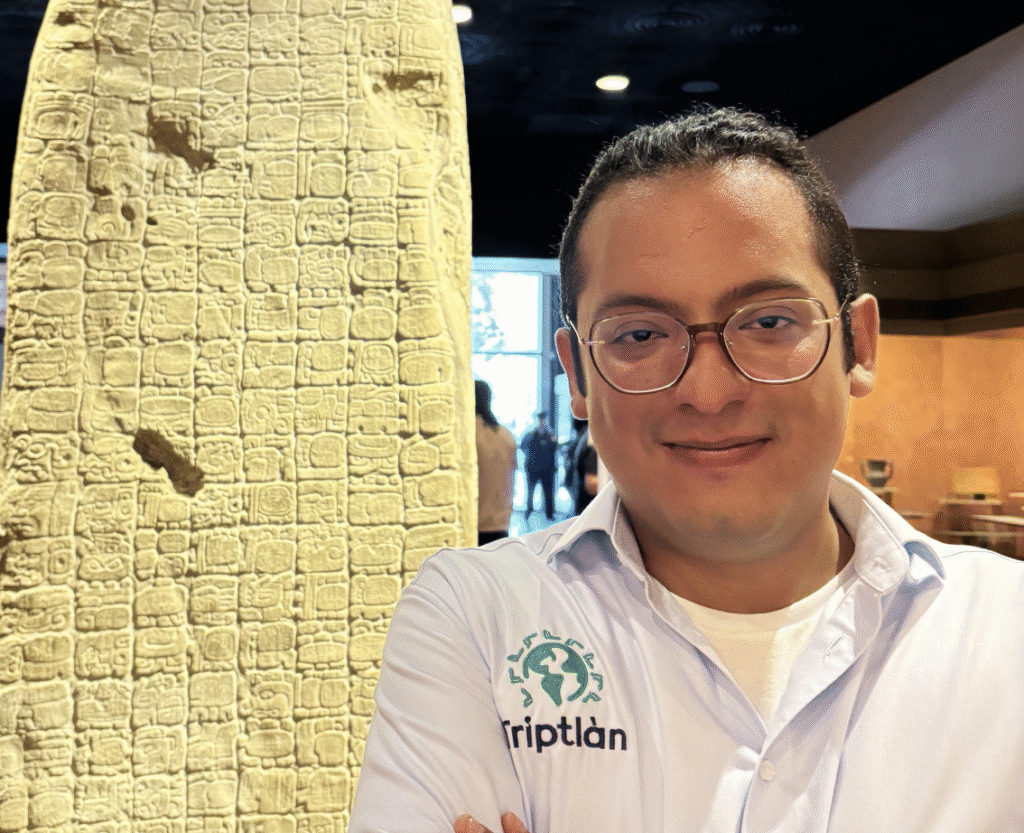
Triptlán offers an exclusive private tour of the Maya collection at the National Museum of Anthropology led by Ángel A. Sánchez Gamboa, a historian and epigrapher affiliated with INAH, Mexico’s national authority for archaeology and cultural heritage.
Ángel holds a degree in History from UNAM and is currently pursuing graduate studies in Art History. He is co-author of Monumentos escultóricos de Palenque, published by INAH and the Secretaría de Cultura, and has been conducting active field research on archaeological collections across Chiapas since 2015. He has published studies on Toniná, Palenque, and Chinkultic, and organized the First Symposium on Toniná and Its Surroundings in 2022.
When Ángel stands in front of a Maya stele in the museum, he does not read from a prepared script. He reads the inscription itself, identifying each glyph, reconstructing the phonetic values, and explaining what the text actually says about the ruler, the date, the political context, and the civilization that produced it.
This tour is available exclusively through Triptlán with limited availability. It is designed for travelers who want more than a museum visit: historians, researchers, architects, curators, and anyone who has ever stood in front of a carved inscription and wanted to know exactly what it says.Unlock the Secrets of the Maya with Ángel at the National Museum of Anthropology, or explore our full private museum tour for a broader introduction to the collection.
