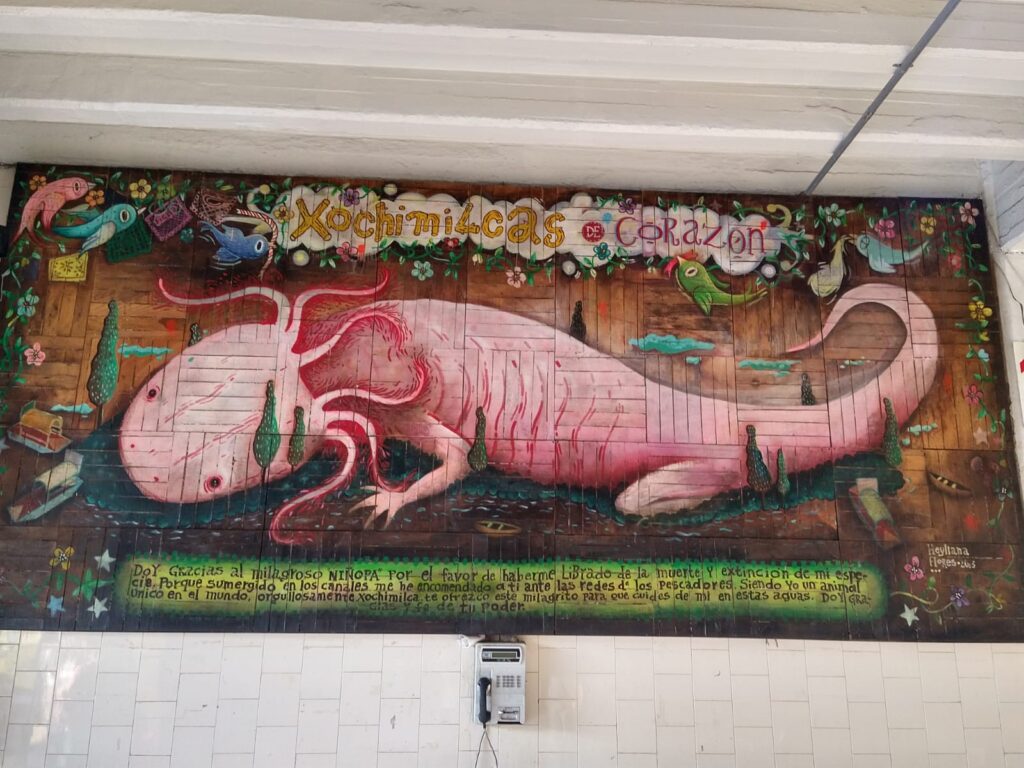
Few creatures represent Mexico’s natural and cultural richness as vividly as the axolotl, also known as the Water Monster. Its name comes from Nahuatl, the ancient language of the Aztecs, who gave this unique salamander its name long before Mexico City existed as we know it today. For the Aztecs, the axolotl was no ordinary animal. According to Nahuatl tradition, it was the earthly form of Xolotl, the god of fire and lightning, condemned to the depths of Xochimilco’s waters for eternity.
In recent years, the axolotl has captured international attention and become a true cultural icon. Its importance is such that February 1st is officially celebrated as National Axolotl Day in Mexico, and its image was even featured on the Mexican 50-peso banknote, a distinction reserved for the country’s most representative symbols.
What Makes the Axolotl So Special?
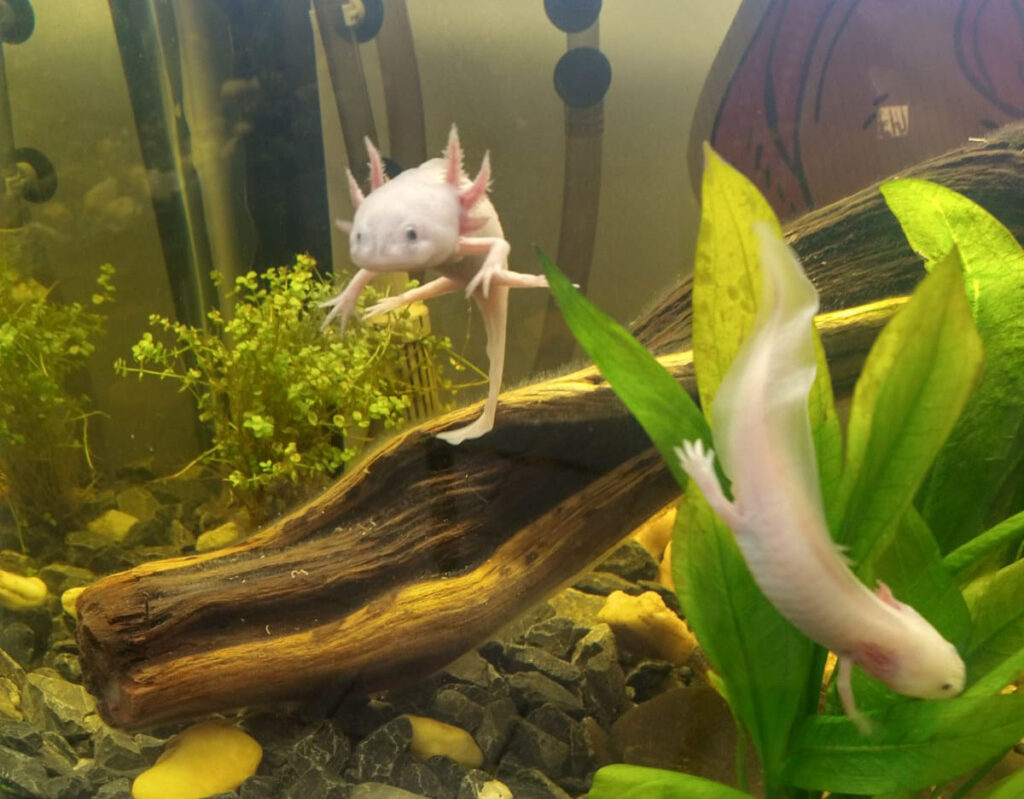
Mexico is home to the greatest diversity of axolotls in the world. Of the 33 known species in the Ambystoma family, 18 live in Mexico, and nearly all of them are endemic, meaning they cannot be found anywhere else on Earth. These fascinating amphibians inhabit mountain streams and highland lakes, particularly in central Mexico.
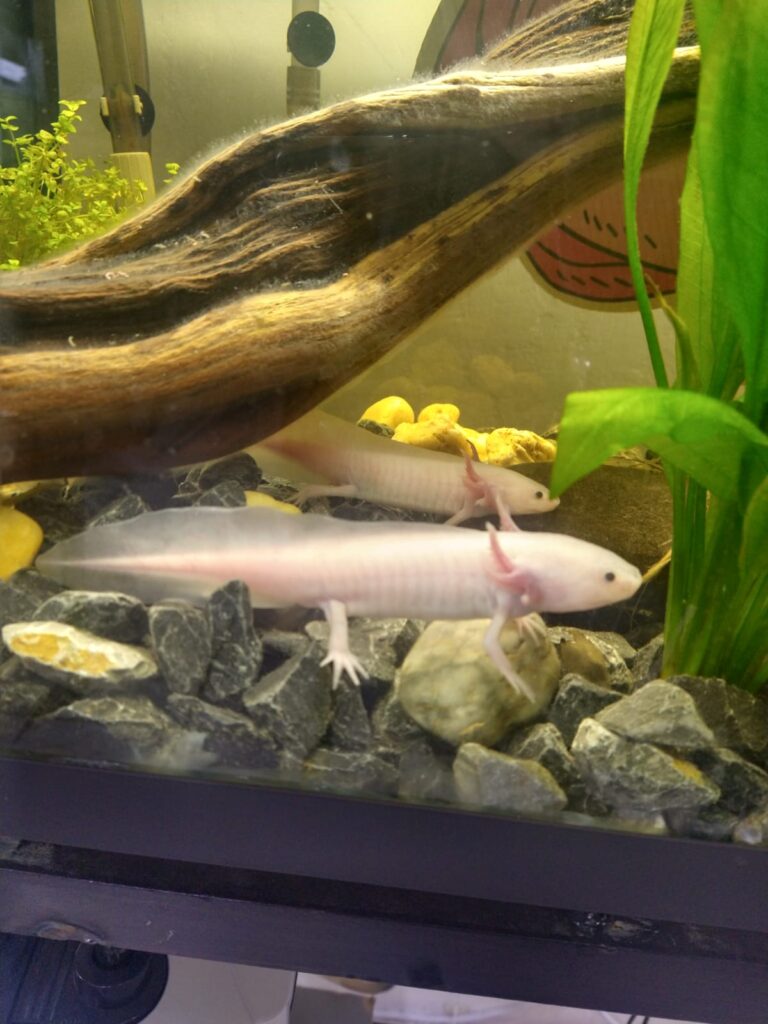
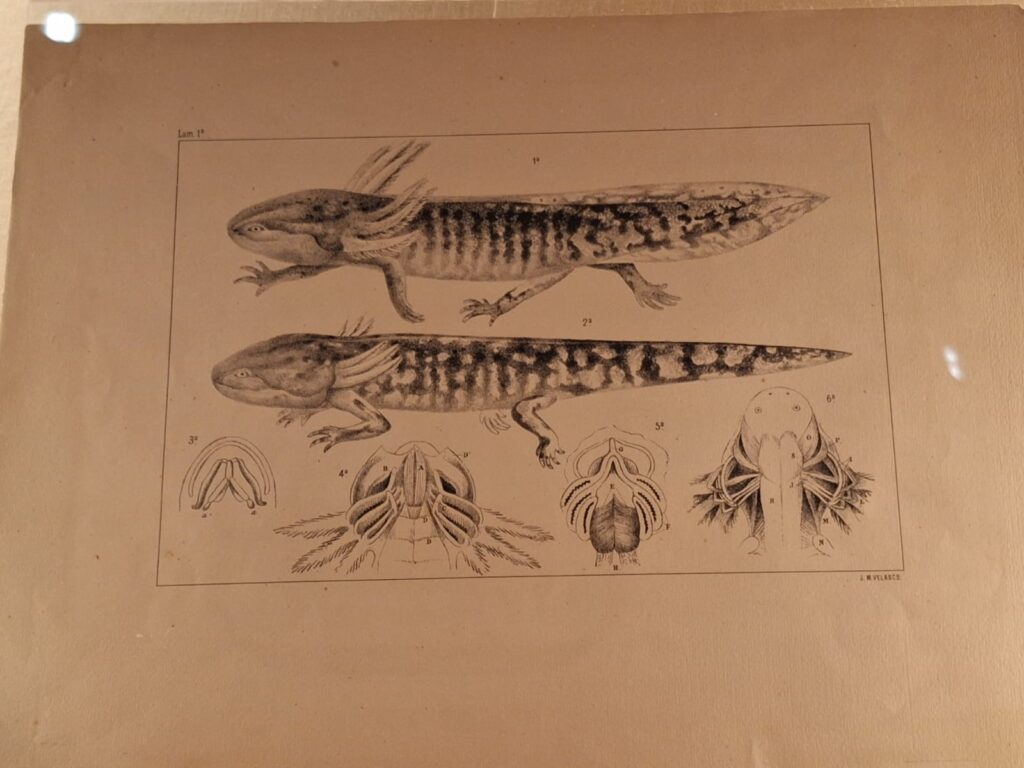
The most well-known species, Ambystoma mexicanum, lives in the canals of Xochimilco, south of Mexico City. Unlike most amphibians, the axolotl never completes its metamorphosis. It retains its external gills and aquatic appearance throughout its life, a rare biological trait known as neoteny, while still being fully capable of reproduction.
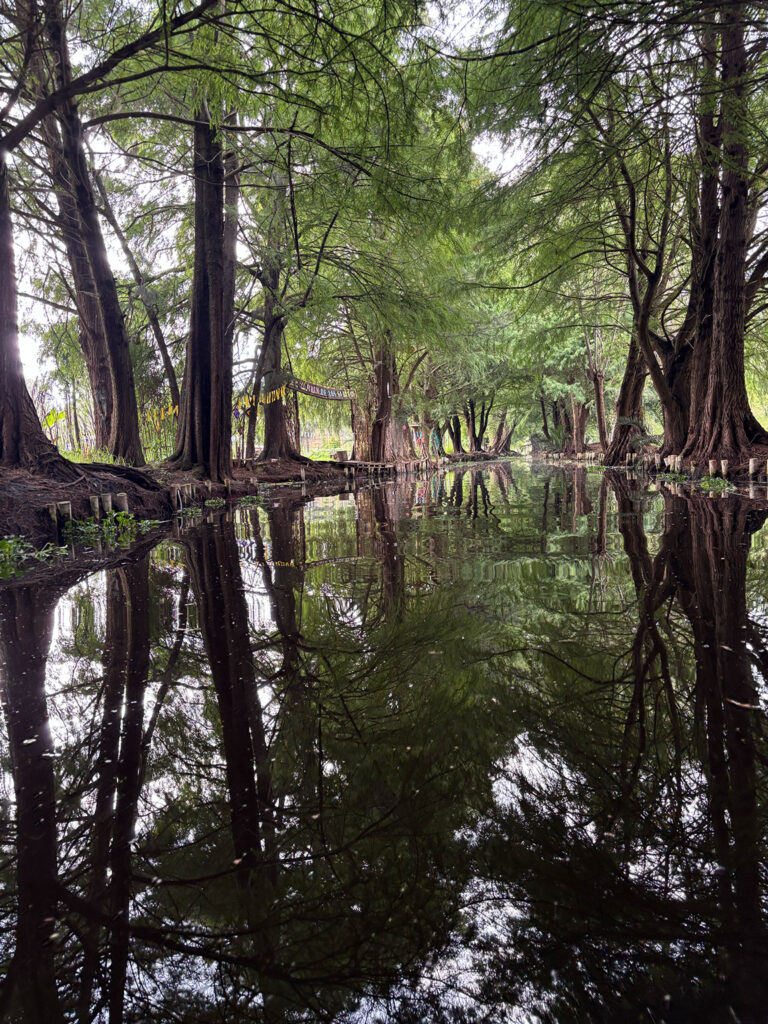
What makes Xochimilco itself remarkable is the landscape the axolotl calls home. The canals run through a network of chinampas, the ancient raised-bed farming islands first built by the Aztecs. These human-made ecosystems have sustained life in this corner of Mexico City for centuries, and they remain the axolotl’s last wild refuge.
The rich soil and root systems of chinampas provide critical axolotl habitats, and can also help capture carbon, offering climate benefits alongside wildlife habitat.
Nature’s Ultimate Survivor
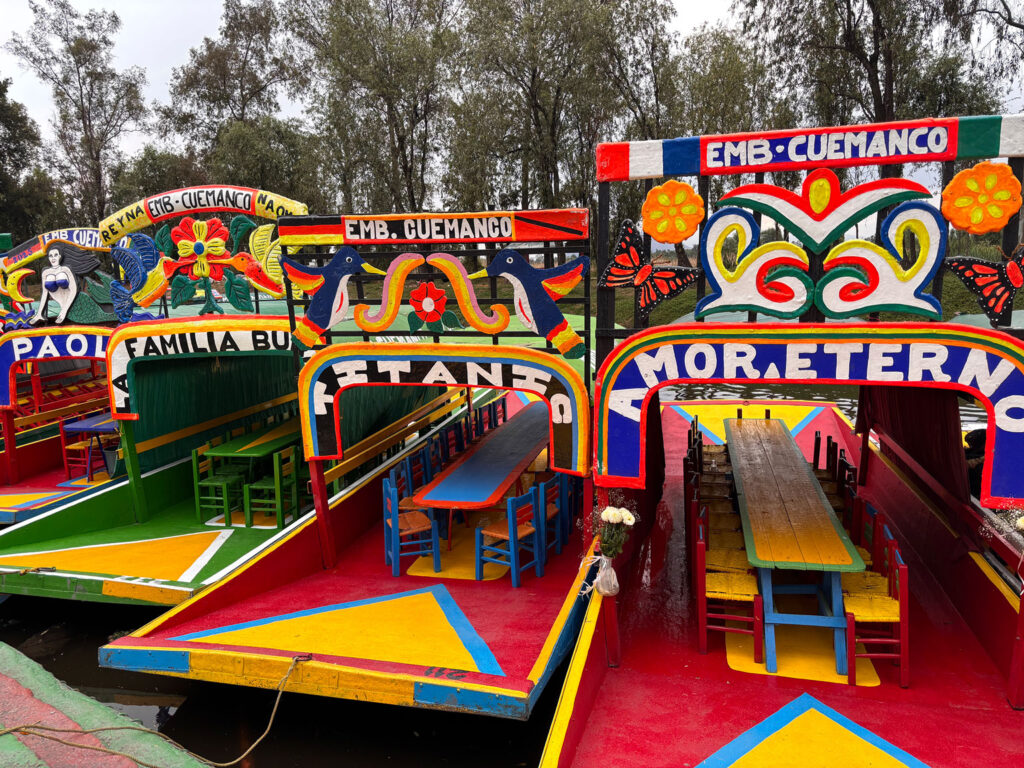
Beyond its unusual appearance, the axolotl is a true biological marvel. It can regenerate lost limbs, as well as parts of its heart, spinal cord, and even sections of its brain.
“If an axolotl loses an arm or leg, it grows back within two months, and it functions as before. The same with its eyes or brain,” according to UNAM researcher Vania Mendoza. “These regenerative properties are very interesting for the medical world, for researchers who want to know more about aging or who are fighting cancer.”
That combination of cultural significance and scientific value makes the axolotl unlike almost any other species on Earth. It is simultaneously a symbol of ancient Mexico, a subject of cutting-edge medical research, and one of the most recognizable animals in the world, despite the fact that almost no one will ever see one in the wild.
How Close Is the Axolotl to Extinction?
The axolotl is listed on the IUCN Red List as critically endangered, a status it has held since 2006. The numbers behind that designation are striking.
Its population has crashed by 99.4 percent in less than two decades, falling from approximately 6,000 individuals per square kilometer in 1998 to just 100 by 2008, then further to 36 by 2014.
Current estimates suggest between 50 and 1,000 axolotls remain in the wild.
The causes are well documented. Urban runoff and untreated sewage have severely degraded water quality in Xochimilco. Non-native fish introduced for human consumption prey on axolotls and compete for food. Urbanization and agricultural expansion have fragmented their natural habitats.
Tilapia and carp, introduced by the Mexican government in the 1970s to combat hunger, quickly decimated what was left of the already-dwindling wild population. For millennia, the axolotl had existed with virtually no predators until those invasive fish were introduced.
The conservation response has been serious. Scientists are working with local chinampero farmers to create pesticide-free canal sanctuaries using traditional chinampa farming methods. Semipermeable barriers block invasive fish while allowing water flow, and water clarity in refuge areas has improved. These refuges support axolotls alongside native crayfish and silverside fish, increasing overall biodiversity.
Conservation International has joined the effort, installing biofilters built from volcanic rocks and reedy plants near chinampas to keep out pollutants and invasive fish. Over the next 10 to 15 years, the project aims to restore 60 percent of Xochimilco’s chinampas.
In a study published in May 2025, researchers released and tracked 18 captive-bred axolotls in Lake Xochimilco and a nearby artificial wetland. “The amazing news is that they all survived,” said study lead author Alejandra Ramos. “And not only that, but the ones that we recaptured had gained weight, so they’re hunting.”
It is a small but significant sign that the ecosystem can still sustain them when managed correctly.
How to See the Axolotl Responsibly in Xochimilco
Not every Xochimilco tour is the same. Xochimilco is mostly known for its party boats called trajineras, where foreigners and locals gather to celebrate birthdays or have a fun, booze-filled day drifting through the canals. The axolotl does not live there. It inhabits the quieter, ecologically protected sections of the canal network, away from the noise and pollution of the tourist routes, where traditional chinampa farming is still practiced and water quality is actively monitored by conservationists.
Visiting responsibly means choosing a guide who understands the difference: someone who can take you to the right part of the canals, explain what you are actually looking at, and connect the experience to the broader conservation effort keeping this species alive. It also means supporting the local chinampero farmers whose work directly protects the axolotl’s habitat. Every responsible visit to Xochimilco is, in a small way, a contribution to the survival of a species.
UNAM’s Adopt an Axolotl program allows visitors and supporters to contribute directly to captive breeding and research. And organizations like Conservation International are working with local communities to restore the chinampa ecosystem at scale over the next decade.
Our Xochimilco tour is designed exactly for this: a private, culturally grounded experience that takes you beyond the trajineras and into the living history of these waterways. You will not be guaranteed a sighting, and any guide who promises you one is not being honest. What we can promise is that you will understand what you are looking at, why it matters, and what is being done to protect it.